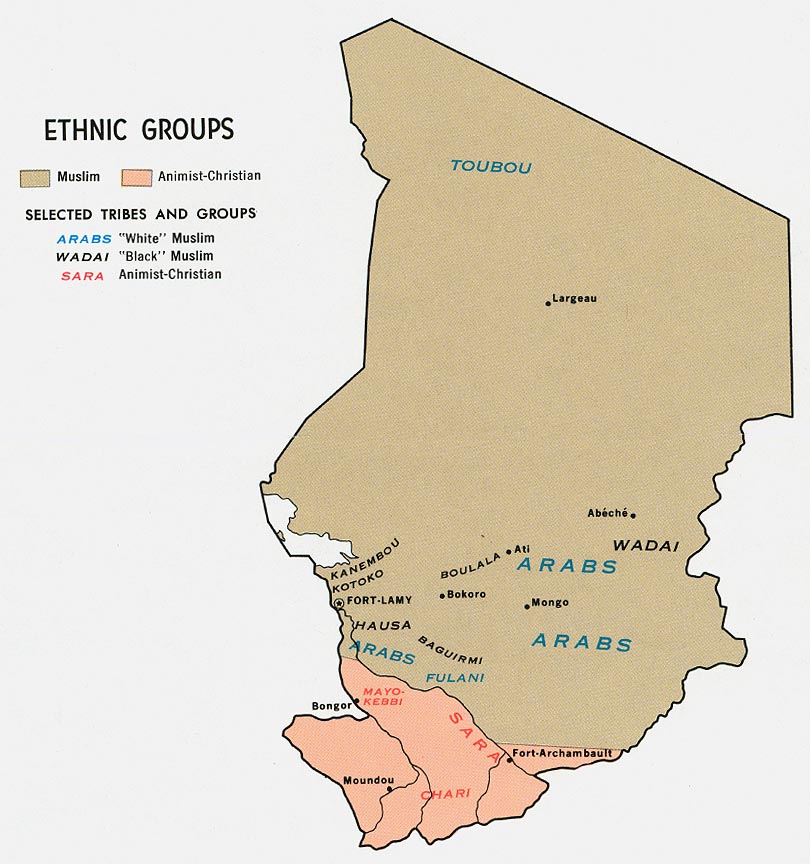
The Bediondo Mbai live in southern Chad in the savanna regions along the Chari River Basin. This part of the country has fertile soil and seasonal rains that support farming villages. Most Bediondo Mbai communities are rural, with homes clustered near fields where families grow their crops.
They speak Bedjond, a language in the Central Sudanic branch of the Nilo-Saharan language family. Their language is related to that of several neighboring peoples in southern Chad, reflecting long-standing connections through trade, migration, and intermarriage. Some people also use French or regional trade languages, especially in towns or in areas where schooling is available.
Historically, the Bediondo Mbai developed within the wider cultural setting of the Sara-related peoples of southern Chad. Communities have traditionally been organized around extended families and clan relationships, with elders providing guidance for village life. Farming, cooperation among relatives, and strong community ties have shaped their social structure.
During the twentieth century, schools, churches, and medical work gradually reached many communities. These influences introduced new opportunities for education and Christian teaching while village life and agricultural traditions continued to remain central to Bediondo Mbai society.
Most Bediondo Mbai people live in rural villages surrounded by farmland. Agriculture is the main occupation, and families depend heavily on the seasonal rains to produce crops. Farmers typically grow staples such as sorghum, millet, maize, and peanuts. Small vegetable gardens may also provide okra, peppers, or leafy greens for household meals.
Livestock such as goats, chickens, and sometimes cattle are kept near the home. These animals provide additional food and serve as valuable assets that can be sold or used in social obligations such as bride price or community celebrations.
Food is usually simple but nourishing. Grain-based dishes are common, often prepared as thick porridge or paste and served with sauces made from vegetables, ground peanuts, or dried fish. Meals are often shared communally, strengthening family relationships.
Family life is central to Bediondo Mbai culture. Households typically include extended family members, and respect for elders is highly valued. Parents teach children practical skills such as farming, cooking, and caring for livestock from an early age. Marriage is an important milestone that links families and clans together.
Community celebrations are an important part of village life. Weddings, harvest festivals, and church gatherings bring people together for singing, dancing, storytelling, and shared meals. Music and rhythmic dancing are especially valued forms of expression that celebrate both cultural heritage and faith.
Christianity is the primary religion among the Bediondo Mbai, and many people identify with various Christian traditions. Churches are present in many communities, and church gatherings often play an important role in weekly life. Some believers actively follow evangelical teachings and participate in outreach and discipleship ministries.
Even among Christians, traditional beliefs sometimes continue to influence daily life. In the past, many Bediondo Mbai practiced forms of traditional African religion that emphasized respect for ancestors and spiritual forces believed to influence health, harvests, and community well-being. Elements of these beliefs still appear, particularly in rural areas.
Prayer, worship services, and Bible teaching are common expressions of Christian faith among the Bediondo Mbai. Churches often serve as centers for community life, education, and social support.
Because there is already a significant Christian presence, many believers among the Bediondo Mbai have the potential to become a strong gospel witness. As their faith grows deeper, they can play an important role in sharing the good news with ethnic groups in Africa without an adequate gospel witness.
Many Bediondo Mbai communities face economic challenges connected to rural life in Chad. Families often depend on rainfall for successful crops, so droughts or poor harvests can lead to food insecurity. Improved farming methods, access to clean water, and better healthcare would strengthen the well-being of many villages.
Educational opportunities are also limited in some areas. Schools may be distant or lack adequate resources. Increased access to education could help young people develop skills that improve their communities.
Spiritually, continued discipleship and leadership training are important needs. Many believers would benefit from deeper biblical teaching and resources in their own language. Strong local churches and trained Christian leaders can help nurture mature faith and guide the next generation.
There is also a need for believers to grow in unity and vision for mission. As the Bediondo Mbai church becomes stronger, they can become a powerful force for sharing the gospel among less reached peoples throughout Chad and surrounding regions.
Pray that Bediondo Mbai believers will grow strong in faith and biblical understanding.
Pray for Christian leaders who will guide churches with wisdom and humility.
Pray for improved farming, clean water, and healthcare in Bediondo Mbai communities.
Pray that the Bediondo Mbai church will become a Christ-bearing people to Muslim peoples in the north.
Scripture Prayers for the Bediondo Mbai in Chad.
https://en.wikipedia.org/wiki/Sara_people
https://en.wikipedia.org/wiki/Doba_language
https://www.britannica.com/place/Chad/People
https://www.ethnologue.com/language/bdj
https://minorityrights.org/country/chad/
https://globalmissiondata.org/ethniccountry.php-b=Chad&submit=Search
https://warehouse.agwm.org/repository/pdf/daily-prayer/2022/2022-Africa-Sub-Sahara-DPG-AG.pdf
| Profile Source: Joshua Project |